

Occupational Safety and Working at Height Standards: The Complete Guide
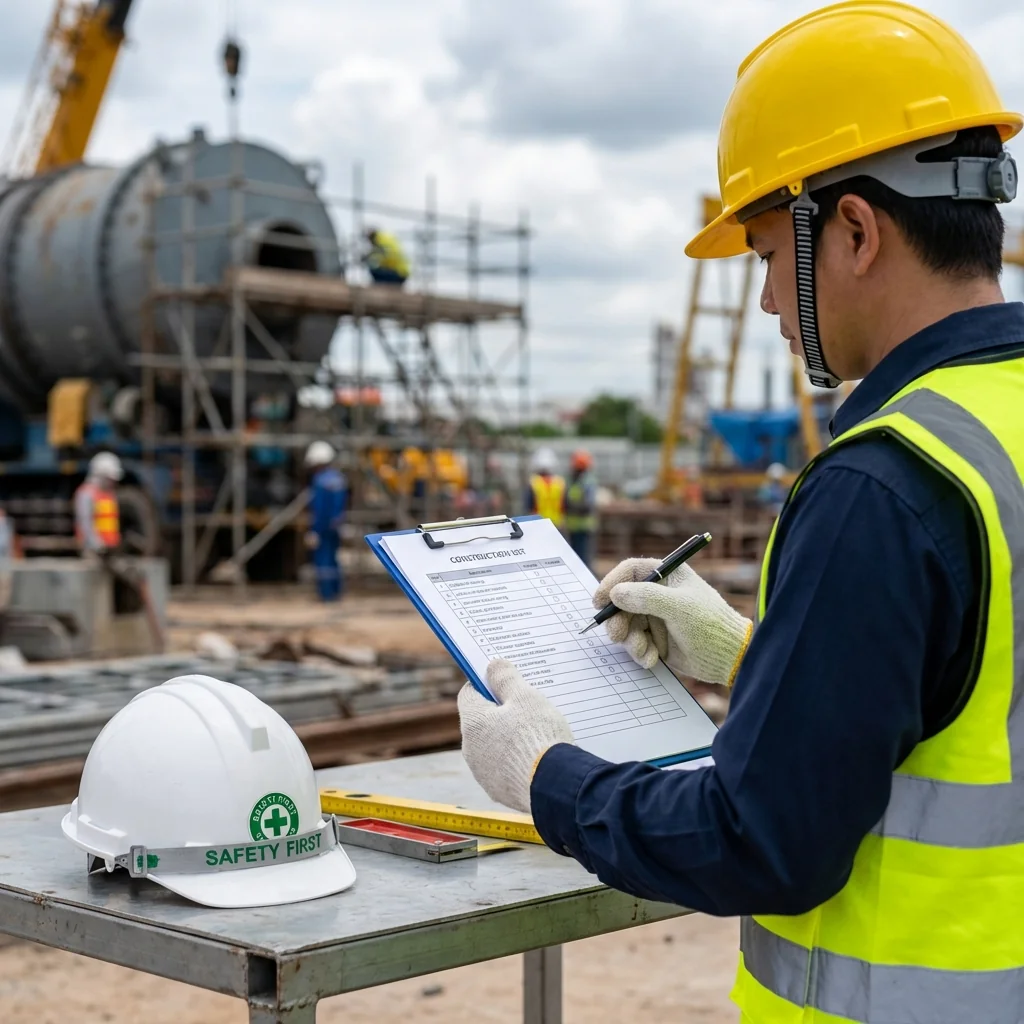
Working at height is considered one of the most dangerous business activities worldwide. A significant portion of occupational accidents occurring every year in Turkey stems from falling from heights, and these accidents usually result in severe injury or death.
In this comprehensive guide, we will cover all aspects of working safely at heights: legal regulations, personal protective equipment, risk assessment, platform safety, and emergency procedures.
Working at Height in Turkey: Legal Framework
Occupational Health and Safety Law No. 6331
In Turkey, safety for working at height is regulated by the Occupational Health and Safety Law No. 6331 and related regulations. Under this law, the responsibilities of employers are:
- To conduct or have a risk assessment conducted
- To provide suitable personal protective equipment (PPE) to employees
- To regularly provide or accommodate OHS training
- To record and report occupational accidents and diseases
- To continuously monitor and improve the safety of the working environment
Regulation on Occupational Health and Safety in Construction Works
This regulation details the conditions for working at height, especially in the construction sector:
- It is mandatory to take precautions against falling at heights of 2 meters and above
- Scaffolding, platform, and ladder systems must comply with standards
- The height of the guardrails must be at least 100 cm
- All openings with a risk of falling must be covered or protected
- Employees must undergo regular health checks
Personal Protective Equipment (PPE)
Hard Hat (Safety Helmet)
- Must comply with the EN 397 standard
- The chin strap must definitely be attached
- Must provide protection against impact, puncture, and electrical risks
- Helmets that are cracked or older than 5 years should not be used
Safety Harness and Fall Arrest System
It is the most critical PPE component of working at height:
Full Body Harness (EN 361)
- Consists of shoulder, chest, waist, and leg straps
- Distributes the load evenly to the body in case of a fall
Lanyard (EN 354 / EN 355)
- Connects the safety harness to the anchor point
- Must have energy-absorbing properties
- Maximum free fall distance should be limited to 2 meters
Safety Footwear
- Must be up to the EN ISO 20345 S3 standard
- Steel or composite toe protection
- Non-slip and puncture-resistant sole
Platform and Manlift Safety Rules
Pre-Use Checks
At the beginning of every working day:
- Visual inspection: Checking for cracks, deformation, corrosion, leaks
- Hydraulic system: Checking hose connections, oil level
- Electrical system: Checking cable connections, battery status
- Safety devices: Emergency stop buttons, tilt sensors
- Guardrails: Checking firmness, pin locks
- Tires: Checking pressure, wear, damage
- Control system: Testing that all controls work properly
Operational Rules
- Never jump or run on the platform
- Never sit on or climb the guardrails
- Never exceed the platform capacity
- Strictly adhere to wind speed limits (usually 45 km/h)
- Keep a safe distance from power lines (at least 3 meters)
Risk Assessment
1. Hazard Identification
- Fall hazards (edges, openings, slippery surfaces)
- Falling object hazards (hand tools, materials)
- Electrical hazard (high voltage lines)
- Weather conditions (wind, rain, freezing)
2. Risk Analysis
Risk = Probability x Severity
- Low Risk (1-4): Existing precautions are sufficient
- Medium Risk (5-12): Additional precautions are required
- High Risk (13-25): Work is stopped, emergency action is taken
3. Hierarchy of Control Measures
- Elimination: Completely eliminating working at height
- Substitution: Replacing with a safer method
- Engineering control: Guardrail, safety net, platform
- Administrative control: Work instructions, training, supervision
- PPE: Safety harness, hard hat (last line of defense)
Common Safety Mistakes
1. Lack of PPE Usage
Not wearing a safety harness by saying "It's just a 5-minute job." The vast majority of occupational accidents occur during short, routine tasks.
2. Inadequate Training
Using the platform without receiving operator training. All operators must have received up-to-date training specific to the type of platform they use.
3. Skipping Daily Checks
A systematic checklist must be applied at the beginning of each working day.
4. Ignoring Weather Conditions
An anemometer (wind speed meter) must be used, and the limit values must be strictly adhered to.
Emergency Procedures
Rescue Plan
- The rescue of the operator stranded in the air must be planned to happen within 30 minutes
- Rescue equipment must be readily available in the work area
- All team members must know the rescue procedure
Conclusion
The safety of working at height is not just a legal obligation, but also a moral responsibility.
As Neta Platform, we prioritize safety above all else. All our equipment undergoes regular periodic inspections, our operators are certified, and we offer comprehensive safety training support to our customers.
This guide was prepared using the current OHS legislation and international safety standards as a reference.
Author
Neta Platform Technical Team
We provide platform, crane, and heavy machinery rental solutions with 20+ years of industry experience.


